No Objection Certificate (NOC) for Property Transfer: Everything You Need to Know
August 25, 2025
Introduction
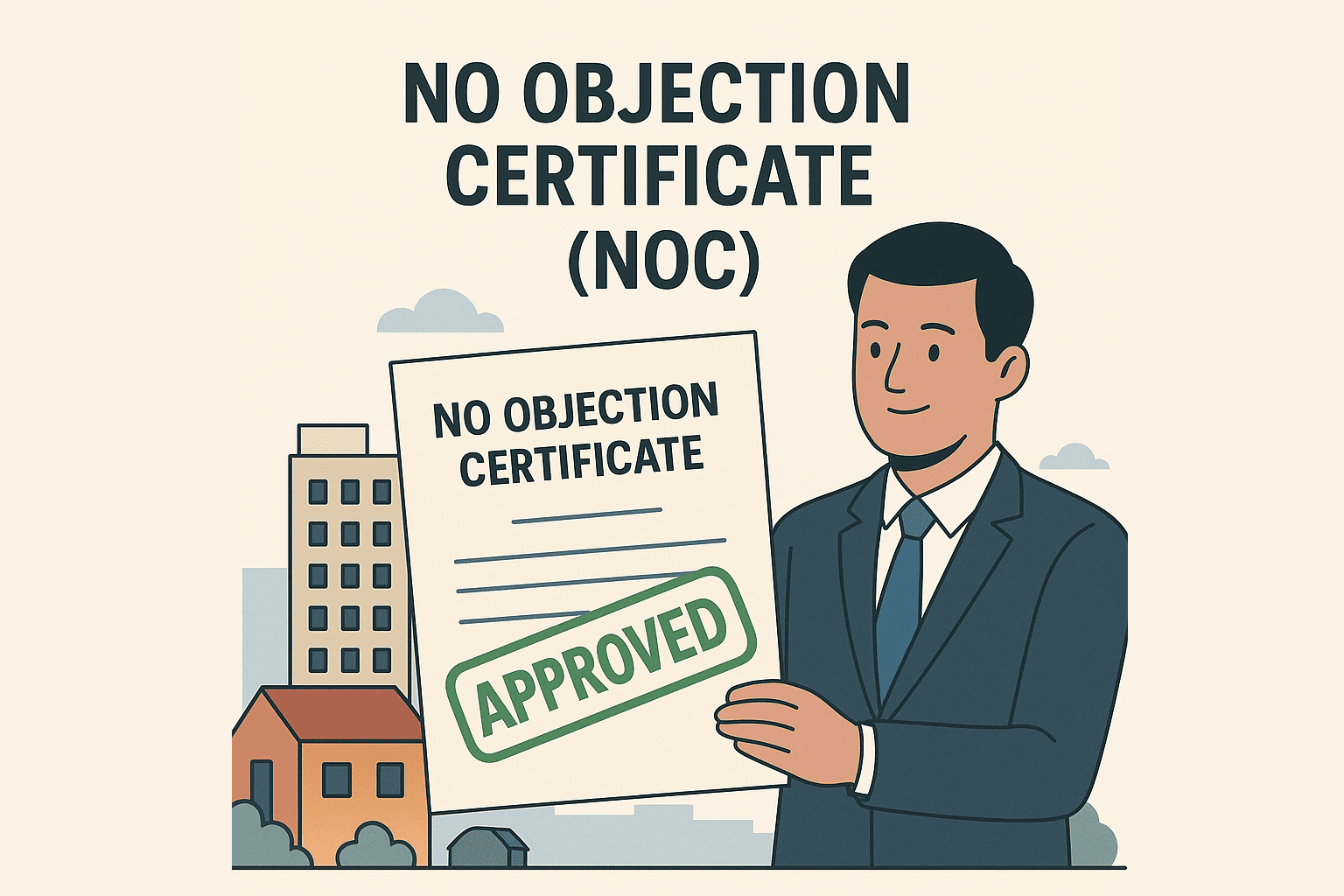
A No Objection Certificate (NOC) is a crucial legal document issued by an authority confirming that it has no objections to a property’s sale, transfer, or registration. It safeguards transactions by certifying that the property is free from disputes, dues, or encumbrances.
What is a No Objection Certificate for Property Transfer?
An NOC confirms there are no objections to transferring or registering a property, protecting both buyers and sellers. They are critical in inherited properties, POA-based transfers, housing society approvals, and bank loan closures.
Why is an NOC Required?
- Prevents future disputes and objections.
- Ensures compliance with regulatory authorities (SEBI, tax, urban planning).
- Provides financial institutions confidence about legality.
Key Scenarios Where an NOC is Mandatory
- Builder-to-Buyer: Confirms no litigation/dues in first sales.
- Resale of Flats: Societies issue NOC confirming dues are cleared.
- Loan Closure: Banks issue NOC after mortgage repayment.
- Government Land Transfers: Ensures compliance with land-use rules.
- Power of Attorney Transfers: Validates POA-based transfers.
- Family Property Transfers: Avoids inheritance disputes.
- Employment Housing: Confirms eligibility to transfer employer-provided housing.
Types of NOCs
- Builder NOC – Developer confirms clear dues for first sale.
- Bank NOC – Issued after loan closure.
- Society NOC – Clears dues before resale.
- Government NOC – Required for leasehold/authority land.
- Employment NOC – Employer housing transfers.
- Inheritance NOC – Issued by heirs for succession.
- Regulatory NOC – For SEBI/IPO-linked transactions.
Documents Required
- Sale deed or agreement
- Ownership proof
- Loan closure certificate (if applicable)
- Identity proof
- Tax/utility clearance receipts
- Society maintenance clearance
- Builder’s allotment letter (if under-construction)
- Application to authority
Process to Obtain an NOC
- Submit application to authority.
- Attach supporting documents.
- Pay applicable fees.
- Verification by authority.
- Issuance of NOC (offline or online).
Risks of Not Having an NOC
- Property registration rejection.
- Transaction cancellation.
- Disputes with societies, banks, heirs.
- Risk of repossession (loan not formally closed).
- Delays in title transfer.
- Legal penalties in strict states.
- Rejection of loan/visa applications tied to disputed ownership.
Conclusion
An NOC is more than paperwork—it’s a legal shield ensuring property transactions are dispute-free, transparent, and secure. Whether buying, selling, or inheriting property, having the right NOC avoids risks and builds trust.
At Zenvista, we guide clients through every legal and procedural step, making property transfers safe and hassle-free. In today’s digital-first environment, obtaining NOCs has become quicker and more transparent—ensuring peace of mind in every transaction.